Is it normal for gums to bleed when brushing?
No. Healthy gums are firm and pale pink and do not bleed with normal brushing. Bleeding is a sign of inflammation, most often the early stage of gum disease. The good news is that at this stage it is usually fully reversible.
Common causes of bleeding gums
- Plaque and tartar along the gum line (gingivitis), by far the most common cause
- Brushing too hard or using a hard-bristled brush
- Starting to floss after a long break; this settles within a week or two
- Hormonal changes during pregnancy, which make gums more sensitive
- Diabetes, which makes gum disease more likely and slower to heal
- Tobacco in any form, including gutka, khaini and smoking
- Blood-thinning medicines; do not stop them without your doctor
- Rarely, vitamin deficiencies or blood disorders
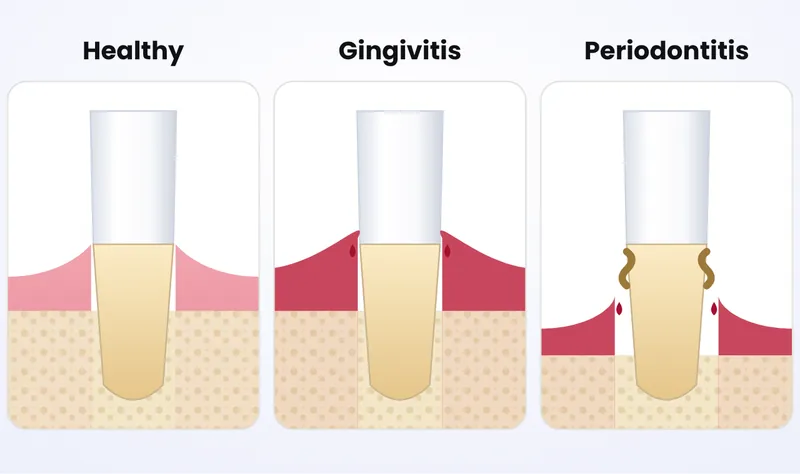
From gingivitis to periodontitis
Gingivitis affects only the gums. If plaque and tartar stay in place, the infection spreads below the gum line to the bone that holds the teeth. This is periodontitis. The gums pull back, pockets form around the teeth, and over time teeth can loosen. Periodontitis can be controlled with treatment, but lost bone does not fully grow back, so treating bleeding gums early matters.
| Gingivitis | Periodontitis | |
|---|---|---|
| Signs | Red, puffy gums that bleed when brushing | Receding gums, bad breath, pus, loose teeth |
| Bone affected | No | Yes |
| Reversible | Yes, usually within weeks | Can be controlled; bone loss is permanent |
| Treatment | Scaling and better brushing | Deep cleaning, sometimes gum surgery |
What to do at home
- Brush twice a day for two minutes with a soft brush, angled towards the gum line
- Keep brushing the bleeding areas gently. Avoiding them makes the inflammation worse
- Clean between the teeth once a day with floss or small interdental brushes
- Rinse with warm salt water if the gums feel sore
- Cut down on sugary snacks and sweet tea or coffee between meals
- Stop chewing tobacco and paan with tobacco, and stop smoking

Myths about bleeding gums and scaling
"Scaling makes teeth loose"
Scaling removes hard tartar that brushing cannot. Teeth can feel different afterwards because the tartar was filling gaps that gum disease had already created, not because scaling loosened them. Regular scaling helps keep teeth in place.
"A neem stick or charcoal powder will fix it"
Traditional sticks can clean the surface of the teeth, but they cannot remove tartar under the gums, and gritty powders can wear the enamel and irritate the gums. A soft toothbrush with fluoride toothpaste plus professional cleaning works far better.
"Bleeding means I should brush less"
The opposite is true. Gentle, thorough brushing is what calms the gums down. If brushing is painful, see a dentist rather than stopping.
When to see a dentist
- Bleeding that continues for more than two weeks despite good brushing
- Swollen, tender or receding gums
- Bad breath or a bad taste that does not go away
- Pus around a tooth, or a tooth that feels loose
- Bleeding gums during pregnancy or with diabetes
Gum treatment at Bhanu Dental Care
At our clinic in Old Gajuwaka, gum treatment starts with a check of the gums and the pockets around each tooth, then professional scaling. Deeper pockets need deep cleaning of the root surfaces, and advanced cases may need minor gum surgery under local anaesthesia. Regular check-ups and cleaning every six months keep the gums healthy afterwards. A consultation costs ₹300.
This guide is general information, not a diagnosis. For advice about your own teeth, book a consultation.