What each treatment does
Both treatments solve the same problem: a tooth that is painful or infected because decay or a crack has reached the nerve inside it. They solve it in opposite ways.
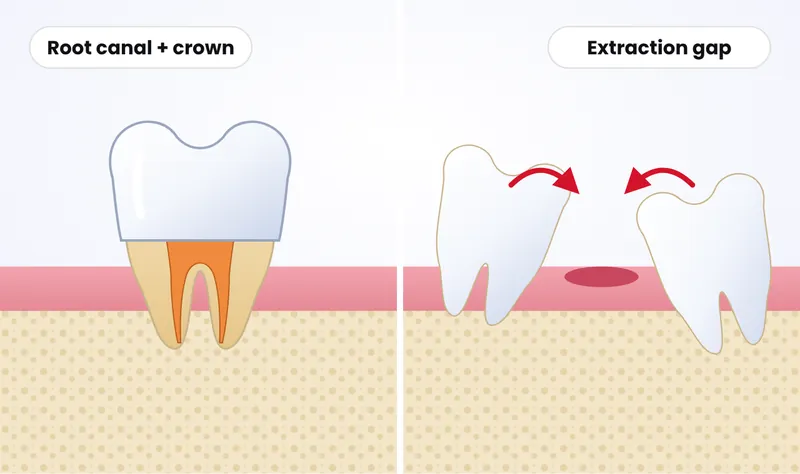
Root canal treatment removes the infected pulp from inside the tooth, cleans and shapes the root canals, and seals them. The outside of the tooth stays in your mouth. Back teeth usually get a crown afterwards so they do not crack.
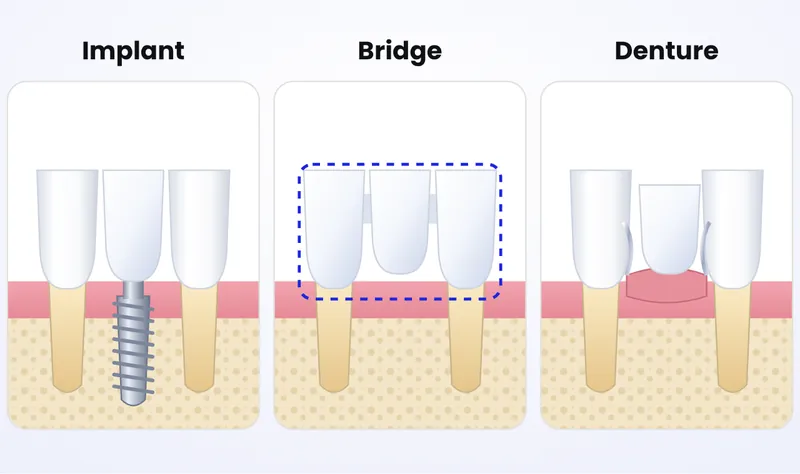
Extraction removes the whole tooth, root and all. The pain goes, but so does the tooth, and the gap it leaves usually needs a dental implant, a bridge or a denture to restore chewing.
Root canal vs extraction at a glance
| Root canal treatment | Extraction | |
|---|---|---|
| Keeps your natural tooth | Yes | No |
| Anaesthesia | Local, the tooth is numb | Local, the area is numb |
| Visits | One to three, plus a crown for back teeth | Usually one, plus visits to replace the tooth |
| Healing | Mild soreness for a few days | The socket takes one to two weeks to heal |
| Chewing afterwards | Normal once the crown is fitted | Reduced on that side until the gap is filled |
| Long term | A treated tooth with a crown can last many years | Nearby teeth can shift and the bone shrinks if the gap is left |
| Total cost over time | Root canal plus crown | Lower at first, but replacing the tooth adds to it |
When a root canal is the better choice
Most teeth that hurt because of deep decay can be saved. A root canal usually makes sense when:
- The tooth hurts with hot or cold food, or throbs at night
- An X-ray shows infection at the root tip, but the root itself is sound
- There is enough healthy tooth left to hold a filling and a crown
- The gums and bone around the tooth are healthy
- It is a front tooth or a molar you need for chewing
When extraction is the better choice
Sometimes saving the tooth is not realistic, or would cost more than it is worth. Extraction is usually advised when:
- The root is cracked vertically or the crack runs below the gum line
- Decay has destroyed so much of the tooth that it cannot hold a crown
- Advanced gum disease has made the tooth very loose
- It is a wisdom tooth that has no opposing tooth or keeps getting infected
- A previous root canal has failed and re-treatment is unlikely to work
What happens if you remove a tooth and do not replace it
Many patients in Gajuwaka choose extraction because it feels quicker and cheaper on the day. The problems show up later. Over months and years:
- The teeth on either side tilt into the gap, creating spaces where food gets stuck
- The tooth above or below grows longer into the space because nothing stops it
- You chew on one side, which strains the other teeth and the jaw joint
- The jaw bone under the gap slowly shrinks, which can make an implant harder later
That is why we always discuss how the tooth will be replaced before we remove it. Our guide to implants, bridges and dentures explains the options.
Is a root canal more painful than an extraction?
No. Both are done under local anaesthesia, and most people feel only pressure. The severe pain people remember is the toothache from the infection, not the treatment itself, and a root canal usually relieves it. After either treatment, some soreness for a few days is normal and settles with the painkillers the dentist advises.
What affects the cost
We cannot give a fair price without seeing the tooth, because the cost of root canal treatment in Visakhapatnam depends on:
- Which tooth it is. Front teeth usually have one canal; molars have three or more
- How severe the infection is and how many sittings are needed
- Whether a crown is needed, and the material, such as metal-ceramic or zirconia
- For extraction, whether it is simple or surgical, and how you plan to replace the tooth
A consultation at Bhanu Dental Care costs ₹300. After the examination and X-ray, the dentist explains both options with their costs, so you can decide with the full picture.

How we decide at our Gajuwaka clinic
Root canal treatment at Bhanu Dental Care is done by our endodontist, a root canal specialist. The decision follows three steps:
- Examination and X-ray to see the root, the infection and the bone
- A clear recommendation: save the tooth, or remove it and replace it
- Costs and number of visits for each option, explained before anything starts
If you have a painful tooth, the sooner it is checked, the more likely it can be saved. A tooth left until it breaks often ends up being extracted.
This guide is general information, not a diagnosis. For advice about your own teeth, book a consultation.