Why the age matters
Braces move teeth by applying gentle, steady pressure through brackets and a wire. Teeth move at any age, but a growing jaw makes some problems easier and quicker to correct. That is why timing matters more for children, while for adults the main requirement is healthy teeth and gums.
Age 7: the first orthodontic check
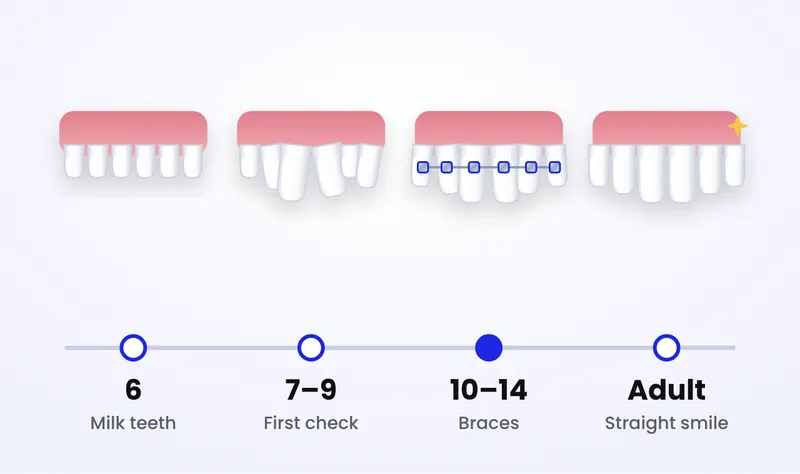
By about age 7 most children have their first adult molars and front teeth. An orthodontist can already see whether the jaws are growing in balance and whether there will be enough space for the adult teeth. Most children do not need braces at this age, but some problems are easier to guide early. Book a check if you notice:
- Crowded or overlapping front teeth
- Upper front teeth that stick out a lot
- Lower teeth that bite in front of the upper teeth
- Thumb sucking that continues after age 4 or 5
- Breathing through the mouth most of the time
- Milk teeth lost very early or very late
Ages 10 to 14: the most common time for braces
Between 10 and 14, most of the milk teeth have fallen and the adult teeth have come through, while the jaw is still growing. This is the window in which most children and teenagers in Gajuwaka start braces. Treatment is usually quicker, and teenagers adapt to braces well.
Can adults get braces?
Yes. There is no upper age limit. Many adults in Visakhapatnam choose braces before a wedding, for a job, or because crowded teeth have become hard to clean. Adult treatment can take a little longer because the jaw has stopped growing, and the gums must be healthy first, so a check-up and cleaning usually come before the braces.
Braces at different ages
| Age | What happens | Typical goal |
|---|---|---|
| 6 to 9 | Early check; occasional early treatment | Guide jaw growth and make space |
| 10 to 14 | Most common time to start braces | Straighten teeth and correct the bite |
| 15 to 18 | Braces work well; jaw growth slowing | Straighten teeth before adulthood |
| Adults | Braces at any age with healthy gums | Straighter, easier to clean teeth |
How long braces take
Most cases take between one and two years, sometimes longer for complex bites. You visit every few weeks for adjustments. After the braces come off, a retainer keeps the teeth in their new position, so wear it as advised.
Looking after teeth with braces
Food gets trapped around brackets easily, so brushing after meals matters more than ever. A few local favourites need care during treatment:
- Avoid hard snacks such as murukku, chakli, chikki and corn on the cob, which can break brackets
- Avoid sticky sweets and toffees that pull on the wire
- Cut fruit such as apples and guava into small pieces instead of biting into it
- Do not chew ice or bite pens and nails
- Limit sweet tea, coffee and soft drinks, which raise the risk of white spots around brackets
Choosing an orthodontist in Gajuwaka
Braces should be planned by a specialist orthodontist, because the plan depends on how the jaws grow and how the teeth bite together, not only on how the front teeth look. At Bhanu Dental Care, braces are planned and fitted by our specialist orthodontist. The first consultation costs ₹300 and includes an examination and a clear explanation of the treatment, time and cost.
Children should also keep up their regular check-ups during treatment. Our kids dentist can look after cavities and cleaning alongside the braces.
This guide is general information, not a diagnosis. For advice about your own teeth, book a consultation.